


Facility managers often face a critical decision when budgeting for their infrastructure. Should ongoing maintenance be prioritized, or should repairs be addressed only after a system failure? While delaying service may appear to preserve short-term cash flow, this approach often leads to significant long-term costs.
Relying on reactive fixes creates a cycle of unpredictable expenses and system outages. Each component failure introduces risk to both customer experience and facility revenue.
This article examines how ad-hoc fixes compare to proactive maintenance strategies over time. It highlights how a shift toward preventative care can protect profitability and ensure long-term system performance.
The Hidden Trap of Reactive Repairs
When a sensor fails or a digital sign goes offline, the immediate reaction is to call a technician. Handling issues as they arise is a common strategy, where service is only performed when necessary.
The challenge with this approach lies in the unpredictability of parking repair costs. Emergency service visits often carry premium pricing. Technicians reprioritize scheduled work to address outages, increasing labor rates. If replacement parts are not readily available, expedited shipping is often required to restore operations.
A failed component rarely impacts one isolated area. A malfunctioning guidance system creates bottlenecks, increases congestion, and negatively impacts the driver experience. Customers who experience delays and confusion are less likely to return. The revenue lost during these periods of downtime often exceeds the cost savings associated with deferred maintenance
Why Parking Maintenance Plans Make Financial Sense
Investing in ongoing maintenance shifts how a facility operates. Instead of reacting to failures, technicians regularly inspect, clean, and update hardware and software.
Parking maintenance plans function as a safeguard for the overall infrastructure. Routine inspections catch minor wear and tear before it leads to system failures. This proactive approach extends equipment lifespan and maximizes your return on your initial investment.
Better Budget Forecasting
One of the greatest advantages of a structured plan is financial predictability. Facility managers can forecast annual budgets more accurately when service costs are known in advance. This eliminates the risk of unexpected, high-cost repairs and allows funds to be allocated more effectively across operations.
Minimized System Downtime
Scheduled maintenance reduces both the frequency and duration of system outages. Technicians identify aging cables, outdated software, and misaligned sensors during routine inspections. and address issues before they escalate. This ensures continuous operation, smooth traffic flow, and a consistent driver experience. Reliable, consistent performance strengthens overall facility reputation.
Comparing the Long-Term Financial Impact
Consider a standard five-year operational timeline.
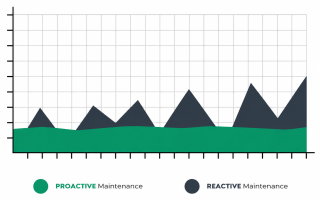
A facility relying on reactive repairs may experience minimal maintenance costs in the first year. By year two, minor failures begin. By year three, a major software glitch or hardware failure requires a significant emergency expense. Over five years, the cumulative cost of premium labor, expedited replacement parts, and lost revenue can escalate substantially.
Conversely, a facility utilizing a maintenance agreement pays a steady, predictable fee from the outset. Expenditures remain consistent without unexpected spikes. Hardware is replaced proactively before failure, and software receives consistent updates to maintain optimal performance. Over the same five-year period, the proactive strategy typically results in lower total cost, along with more consistent revenue and improved customer satisfaction.
Secure the Future of Parking Assets with Parking Guidance Systems
Viewing routine maintenance as an unnecessary expense leaves parking assets vulnerable to sudden failures and inflated repair costs. Preventative service should be treated as a critical component of operational protection.
Implementing a structured maintenance approach ensures equipment operates at peak efficiency over time. This eliminates budget variability and supports a consistent, seamless driver experience.
Contact Parking Guidance Systems today to discuss a custom care strategy tailored to your facility. Our experts will help you safeguard your technology and maximize your long-term profitability.