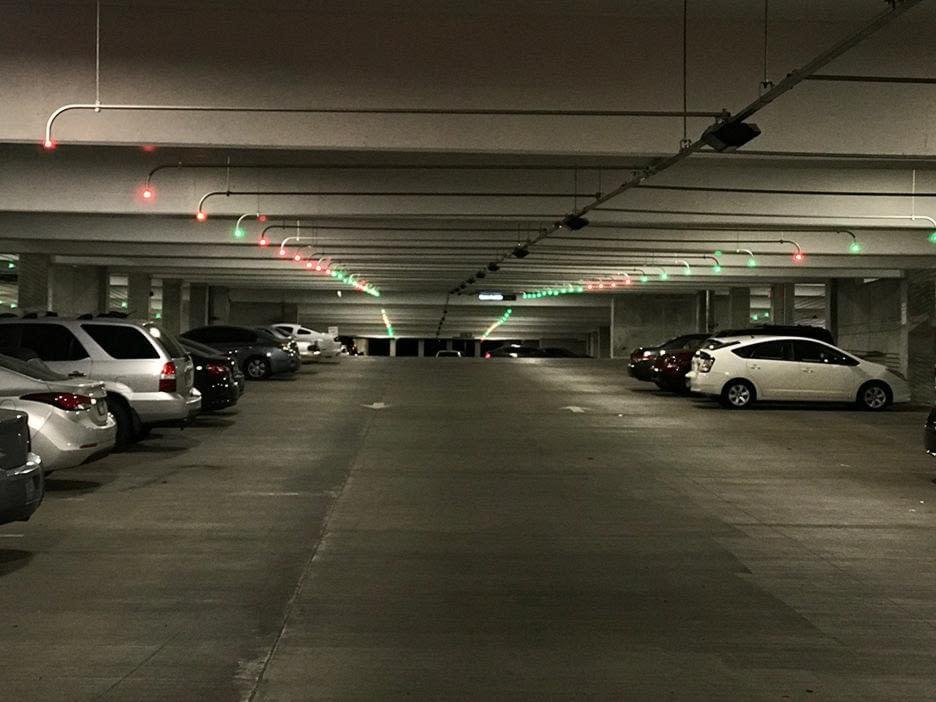
Managing a sprawling parking facility is a complex logistical challenge. For operators of airports, universities, shopping centers, and hospitals, the sheer volume of vehicles entering and exiting daily can quickly turn a well-designed garage into a bottleneck that frustrates visitors and strains operations.The solution isn’t more concrete. It’s more intelligent.
This is where technology shifts the paradigm. While single-space sensors have long been the standard for tracking availability, multi-space parking sensors are emerging as the preferred solution for large-scale operations. By providing comprehensive visibility and granular data, these advanced sensors are redefining how facility managers approach parking efficiency solutions.
Beyond the Single-Space Limitation
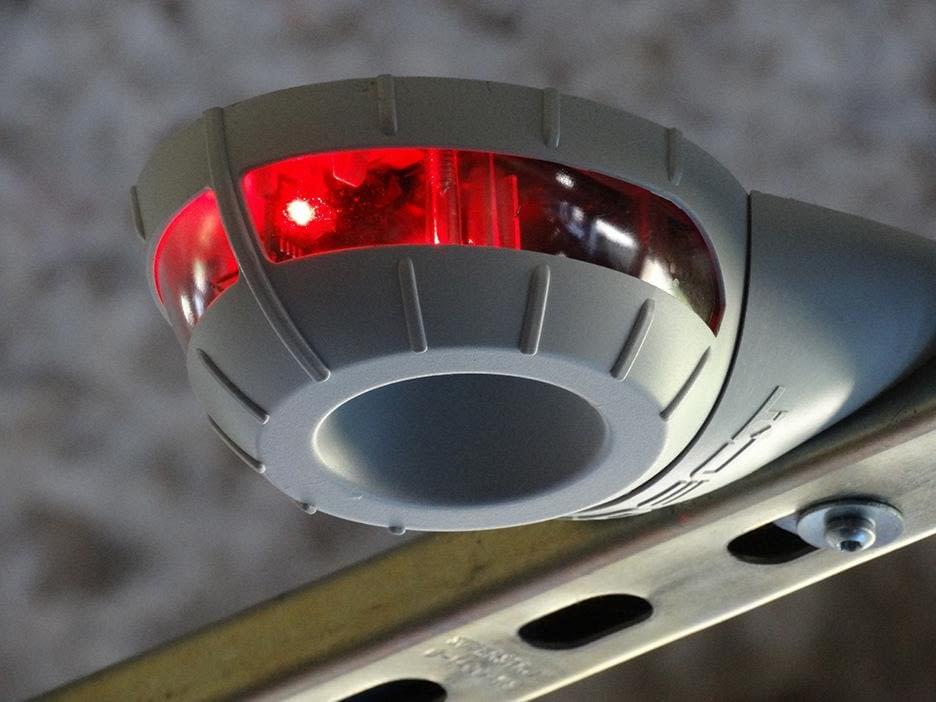
Traditional parking guidance often relies on single-space sensors—typically ultrasonic devices installed above or inside individual parking stalls. While effective for smaller garages, this approach can become cost-prohibitive and maintenance-intensive when scaled up to facilities with thousands of spaces.
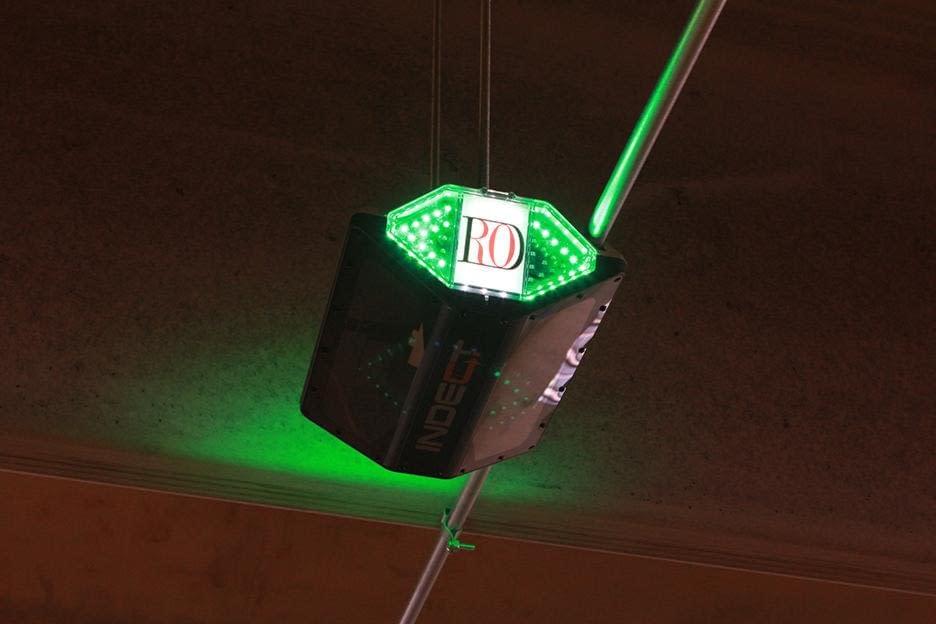
Multi-space parking sensors take a different approach. Utilizing advanced camera-based technology, a single unit can monitor multiple parking bays simultaneously, with Upsolut cameras from PGS covering up to six spaces. This significantly reduces the amount of hardware required to cover a large facility. For a parking asset with 5,000 spaces, moving from a 1:1 sensor-to-spot ratio to a 1:6 ratio represents a substantial reduction in installation time and cabling.
Mastering Parking Occupancy Monitoring
The core value of any guidance system is the accuracy of its data. Parking occupancy monitoring is the pulse of an operation; if data is delayed or inaccurate, the signage directing drivers to “open” zones becomes misleading, resulting in eroded trust and increased congestion.
Multi-space camera sensors utilize sophisticated computer vision algorithms to detect vehicles with high precision. Because these sensors provide a visual feed, they are less prone to interference and false positives.
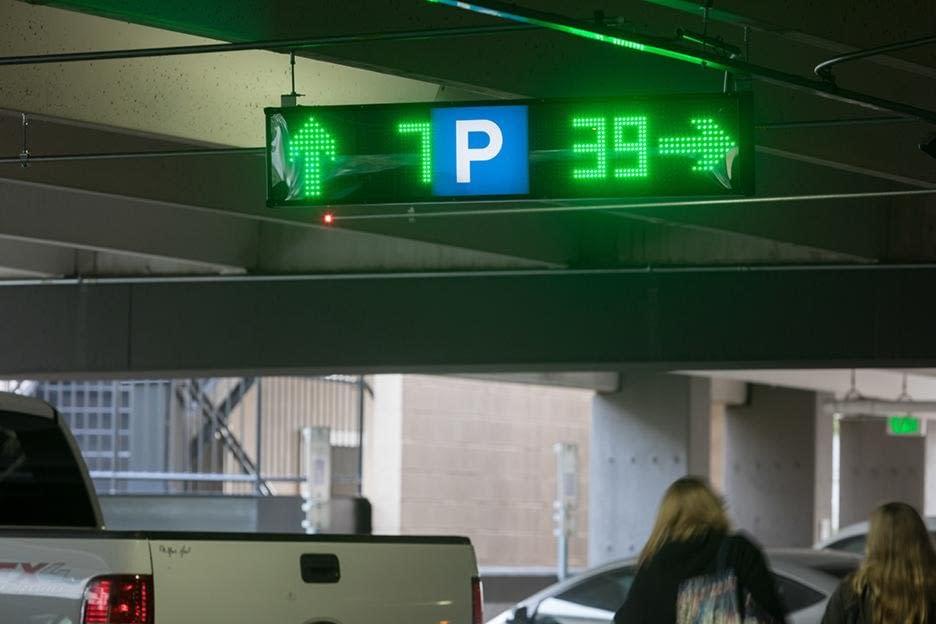
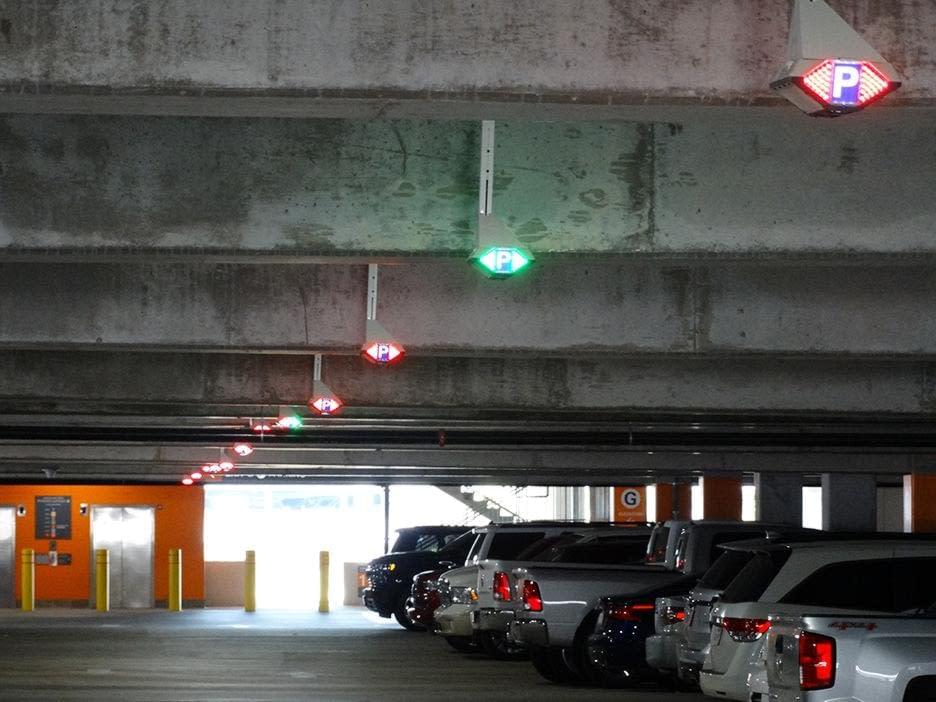
This real-time data feeds into the facility’s guidance system, updating wayfinding signage instantly. When a driver enters a specific zone or level, the system identifies exactly how many spaces are available within that cluster. This immediate feedback loop eliminates the “hunting” behavior and drivers circling endlessly endlessly for a spot which, reduces emissions and keeps traffic flowing smoothly through the aisles.
Enhancing Security and Asset Protection
One of the distinct advantages of camera-based multi-space parking sensors is the dual functionality they provide. Beyond simple vehicle counting, they create a visual record of the parking asset.
In large facilities where security coverage can be limited, these sensors act as additional eyes on the ground. They can assist in monitoring suspicious activity, verifying claims of damage, or simply ensuring that vehicles are parked correctly within the lines. For facility managers, this means the investment in parking efficiency solutions doubles as an investment in security infrastructure, delivering a higher return on investment (ROI).
License Plate Recognition (LPR) Integration
Advanced multi-space sensors, such as Upsolut cameras, are available with integrated License Plate Recognition (LPR) capabilities. This functionality is a significant advantage r for large commercial and private facilities.
With LPR integrated directly into the occupancy sensor, operators can:
- Locate Lost Vehicles: Customers who forget where they parked can simply type their license plate into a kiosk or app to find their vehicle.
- Enforce Rules: The system can automatically flag vehicles that exceed time limits or occupy reserved zones without authorization.
- Analyze Demographics: Managers can gather data on visitor frequency and origin to support marketing and operational decisions.
Data-Driven Decision Making
The implementation of multi-space parking sensors transforms a static parking structure into a valuable source of business intelligence. The software associated with these systems aggregates historical data, allowing operators to identify trends not visible to the naked eye.
For example, heat maps can reveal which zones are constantly over-utilized and which are under-untilized . Armed with this information, management can adjust pricing structures, (implementing dynamic pricing for premium spaces) or reconfigure traffic flow to encourage usage of distant zones. This level of strategic planning is essential for maximizing revenue and extending the lifespan of existing parking assets.
Big Returns for Large Facilities
As the industry moves toward an era of connected vehicles and smart cities, infrastructure within parking facilities needs to be adaptable. Multi-space sensors are software-driven, meaning capabilities can often be expanded through updates rather than hardware replacements. As AI and machine learning algorithms advance, the accuracy and feature set of existing sensors will continue to improve, protecting the initial investment.
For large facilities, the transition to multi-space monitoring isn’t just about counting vehicles; it’s about creating a seamless, stress-free environment for visitors while giving operators greater control. . By leveraging the power of multi-space parking sensors, facility managers can transform parking assets into efficient, profitable, and user-friendly hubs.
Ready to optimize your parking assets?
For facilities seeking to upgrade parking occupancy monitoring, it is time to look beyond the single spot. Contact Parking Guidance Systems today to discuss how our solutions can streamline your operations and improve the driver experience.